
4 Point Home Inspections in 2026: What Insurance Companies Now Require
- January 17, 2026
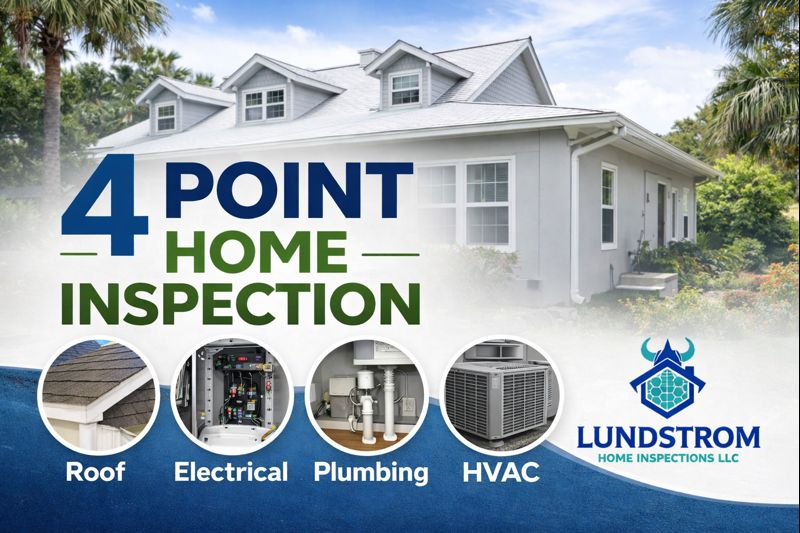
In Florida, a 4 point home inspection is no longer a simple formality requested by insurance companies. By 2026, insurers are relying on these inspections as a core underwriting tool, particularly for homes built decades ago and located in storm-exposed regions like North Port.
For homeowners, buyers, and sellers, misunderstanding the purpose of a 4 point inspection often leads to delayed coverage, unexpected repair demands, or outright policy denial. Insurance companies are not asking for these inspections casually—they are using them to make financial risk decisions.
This guide explains how 4 point inspections are evaluated today, what insurance companies are actually reviewing in each system, and why certain homes encounter problems even when everything appears to be “working.”
What a 4 Point Home Inspection Is — and What It Is Not
A 4 point home inspection is a limited-scope inspection conducted specifically for insurance underwriting. It evaluates four major systems that historically generate the highest claim volume:
Roofing
Electrical
Plumbing
HVAC
The purpose is not to determine whether a home meets current building codes or modern standards. Inspectors are also not evaluating cosmetic conditions or lifestyle upgrades. Instead, the inspection documents condition, safety, and remaining service life as they relate to insurance risk.
This distinction matters. A home can function normally and still raise concerns for an insurer if a system appears likely to fail or cause damage in the near future.
Insurance companies use the report to decide whether they will:
Issue a new policy
Renew an existing policy
Require repairs or replacements before coverage continues
4 Point Home Inspections for Insurance Clarity
Clear documentation of roof, electrical, plumbing, and HVAC systems to support insurance underwriting decisions.
Why Florida Insurance Companies Require 4 Point Inspections
Florida presents a unique insurance environment. Carriers face elevated exposure from hurricanes, wind events, water damage, and aging infrastructure. Over time, these risks have forced insurers to move away from assumptions and toward verified condition reporting.
In North Port, many homes were built during construction periods where materials and installation practices differ from what insurers now consider acceptable risk. As properties age, even systems that have been maintained can fall outside underwriting comfort zones.
As of 2026, insurance companies commonly request a 4 point inspection when:
A home is approximately 30 years old or older
A policy is being rewritten, transferred, or reinstated
Documentation for system upgrades is missing or incomplete
An underwriting review identifies potential exposure
The inspection allows insurers to base decisions on documented conditions, not estimated age or prior assumptions.
Roof Requirements in 2026
From an insurance standpoint, the roof represents one of the most significant sources of potential loss.
Insurers evaluate:
Overall material condition
Signs of active or prior leaks
Deterioration, damage, or improper repairs
Remaining functional service life
Age alone does not automatically disqualify a roof, but it carries substantial weight. In practical terms:
Asphalt shingle roofs receive increased scrutiny once they approach 15 years
Tile and metal roofs are evaluated primarily on current condition and maintenance
Patchwork repairs, exposed fasteners, or visible neglect often trigger underwriting concerns
Insurance companies are not expecting perfection. They are looking for evidence that the roof can reasonably withstand normal weather exposure without generating a near-term claim.
Electrical System Requirements
Electrical systems are among the most common sources of conditional approvals and policy delays.
Insurance companies review:
Panel safety and compatibility
Grounding and bonding practices
Signs of overheating, corrosion, or damage
Unsafe wiring conditions or exposed conductors
The focus is not on modernization for its own sake. A system may operate correctly and still raise concerns if it presents a fire or reliability risk based on observed conditions.
Clear photographic documentation is critical. Underwriters rely on what can be verified visually in the report, not verbal explanations or assumptions about functionality.
Plumbing System Requirements
Water damage remains one of the most expensive and frequent insurance claims in Florida, which makes plumbing a major underwriting focus.
Insurance companies look for confirmation of:
Acceptable piping materials
No active leaks
No visible corrosion or long-term deterioration
Properly installed water heaters
Functional shutoff controls
Older piping materials and aging water heaters are commonly flagged, even when no leaks are present at the time of inspection. Insurers evaluate both current condition and likelihood of failure, not just whether the system is operating during the inspection.
HVAC System Requirements
HVAC systems are reviewed with attention to:
Operational status
Approximate age
Visible damage or improper installation
Potential safety or water-related risks
Insurance companies are generally not focused on efficiency ratings or comfort performance. Their concern is whether the system appears reliable and unlikely to contribute to property damage.
Systems that are significantly beyond typical service life expectations may be flagged, even if they are still functioning.
Common Reasons Homes Encounter Problems with 4 Point Inspections
In North Port and similar Florida communities, issues often arise due to:
Roofs approaching the end of expected service life
Electrical components considered high-risk by insurers
Mixed or undocumented plumbing materials
HVAC systems far beyond typical lifespan ranges
Missing or unclear documentation
Insurance companies do not treat 4 point inspections as pass-or-fail tests. They use them to determine whether the risk is acceptable in its current condition, or whether changes are required before coverage can continue.
Can Homeowners Prepare for a 4 Point Inspection?
Preparation is possible, but expectations should remain realistic.
Effective preparation may include:
Addressing known active issues
Correcting visible safety concerns
Gathering documentation for recent system upgrades
Ensuring all systems are accessible for inspection
Cosmetic improvements do not influence insurance decisions. Condition, safety, and documentation do.
How a 4 Point Inspection Differs from a Full Home Inspection
A 4 point inspection:
Has a limited and defined scope
Focuses only on four major systems
Is performed for insurance underwriting
Does not evaluate structural components, appliances, or interior finishes
Many buyers of older Florida homes choose to obtain both a full home inspection and a 4 point inspection to gain a complete understanding of the property while satisfying insurance requirements.
What North Port Homeowners Should Understand Going Forward
By 2026, insurance companies are applying stricter underwriting standards, but they are also relying more heavily on accurate, well-documented inspections.
A thorough 4 point inspection helps:
Reduce underwriting delays
Prevent last-minute coverage disruptions
Identify real risk areas before policy decisions
Homes that demonstrate maintained systems and clear documentation are more likely to remain insurable, even within Florida’s challenging insurance market.
The key is accuracy, professionalism, and experience—not shortcuts.
Final Thoughts
A 4 point home inspection in 2026 is no longer just a document requested by an insurance company—it is a risk evaluation that directly affects coverage decisions. For homeowners in North Port and across Florida, understanding how these inspections are reviewed can prevent unnecessary delays, surprises, or policy disruptions.
Insurance companies are not looking for perfect homes. They are looking for clear evidence that major systems are safe, functional, and unlikely to fail in the near future. When inspections are thorough, well documented, and accurately reflect current conditions, underwriting decisions tend to move more smoothly.
Whether you are purchasing an older home, renewing an existing policy, or addressing an insurer’s request, a properly conducted 4 point inspection provides clarity for all parties involved. It helps insurers assess risk, helps homeowners understand real system conditions, and reduces last-minute issues that often arise when expectations are unclear.
The most important factors are accuracy, transparency, and experience. When those are present, a 4 point inspection becomes a useful tool—not an obstacle—in maintaining insurance coverage in Florida’s evolving market.
If you’re preparing to buy, sell, or simply gain a clearer understanding of a home’s condition, scheduling a professional inspection with Lundstrom Home Inspections can provide reliable insight and added peace of mind.