
What Sellers Should Fix: Home Inspection Checklist (North Port)
- February 2, 2026
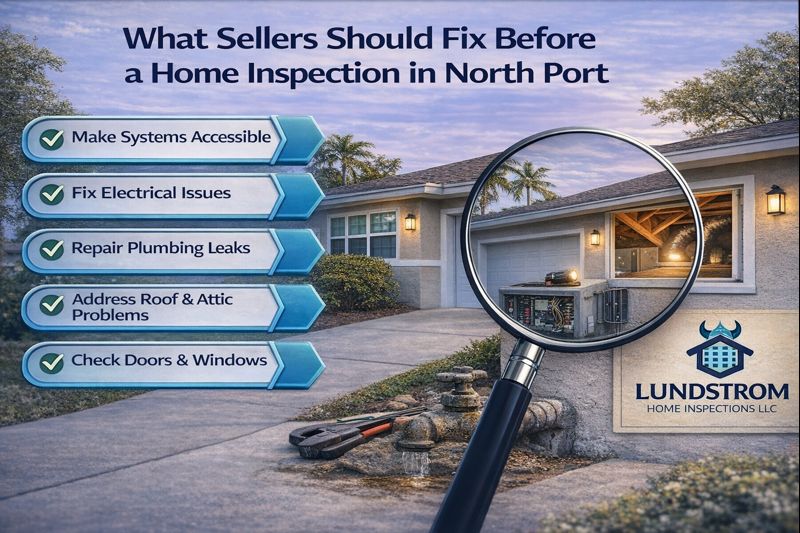
A home inspection does not create problems. It documents the condition of a property on the day of the inspection. That condition reflects how the home has been built, maintained, and repaired over time, as well as how it has responded to climate and daily use.
Sellers who address a small number of common issues before the inspection often reduce unnecessary concerns later in the transaction. This is not about eliminating all findings. It is about correcting avoidable items that consistently appear in inspection reports and tend to influence buyer confidence and negotiations.
Make All Systems Accessible
One of the most common inspection issues is not a defect, but limited access.
Inspectors must be able to safely access major systems in order to evaluate them properly. When access is restricted, it is documented as a limitation, not an assumption of condition.
Before the inspection, sellers should ensure clear access to:
Electrical panels
Water heaters
HVAC equipment
Attic entrances
Blocked panels, sealed attic openings, or mechanical equipment surrounded by storage often raise more concern than minor defects because buyers are left without clear information. Providing access allows the inspection report to reflect the actual condition of the home rather than preventable limitations.
Prepare Confidently for the Home Inspection
Professional inspections help sellers identify common checklist items early, document the home’s condition clearly, and reduce surprises when buyers review the report
Address Common Electrical Safety Items
Electrical findings are among the most frequently noted items in inspection reports, particularly in homes built under older construction standards.
Sellers should address common safety-related items such as:
Missing or damaged outlet and switch covers
Loose outlets or switches
Open or uncovered junction boxes
Double-tapped breakers in electrical panels
Non-functioning GFCI protection in kitchens, bathrooms, garages, and exterior locations
These conditions are documented because they involve safety, not cosmetics. When they remain uncorrected, buyers often assume that routine maintenance may have been deferred in other areas as well.
Repair Plumbing Leaks and Moisture Concerns
Minor plumbing issues appear in many inspection reports and are often the result of slow leaks that have existed for some time.
Before the inspection, sellers should:
Repair dripping faucets
Fix leaking supply lines
Address active leaks under sinks
Secure loose toilets
Replace visibly corroded or leaking shutoff valves
Even if an area is dry on the day of inspection, water staining, corrosion, or past moisture damage is still documented. Addressing the source of the issue ahead of time helps prevent unnecessary follow-up questions and repair requests.
Ensure the HVAC System Operates Properly
Heating and cooling systems are among the most important components evaluated during an inspection, especially in warmer climates.
Sellers should take basic steps to confirm normal operation, including:
Replacing dirty air filters
Verifying the system starts and runs in normal cooling mode
Clearing vegetation and debris around exterior units
Repairing damaged return grilles or loose ductwork
If a system does not respond during the inspection, it is documented as not operating properly, regardless of recent use or verbal explanations. Ensuring basic operation allows the inspection to reflect system performance rather than uncertainty.
Address Obvious Roof and Attic Issues
Roof condition is always a focal point during inspections due to weather exposure and long-term performance concerns.
Common exterior items sellers should address include:
Missing or damaged shingles
Loose or deteriorated flashing
Debris buildup in roof valleys
Damaged fascia or soffits
Inside the attic, inspectors frequently observe:
Staining from past or active roof leaks
Displaced or inadequate insulation
Unsafe or obstructed attic access
Even minor roof-related issues tend to carry added weight during negotiations when they appear unresolved or undocumented.
Check Doors, Windows, and General Operation
Inspectors operate accessible components and document those that do not function as intended.
Sellers should correct:
Doors that do not latch or close properly
Windows that will not open or lock
Broken window panes or failed seals
Missing or damaged window screens
These items are simple to address but significantly affect how the overall condition of the home is perceived by buyers.
Pool and Exterior Safety Considerations
For homes with pools, basic safety and functionality are important inspection items.
Before the inspection, sellers should address:
Missing or damaged pool barriers
Gates that do not self-close and latch
Exposed or damaged wiring near pool equipment
Visible leaks at pumps or filters
Exterior walkways, steps, and handrails should also be secure. Trip hazards are commonly noted and are often easy to correct in advance.
Avoid Improper or Rushed Repairs
Some sellers attempt quick fixes before listing. Poor-quality or unqualified repairs are typically easy to identify during an inspection.
Sellers should avoid:
Unqualified electrical or plumbing work
Cosmetic repairs that conceal active issues
Temporary fixes intended to hide defects
Improper repairs often raise more concern than the original issue and can complicate negotiations unnecessarily.
Setting Realistic Expectations for Sellers
No home is defect-free. A clean inspection report does not mean the absence of findings. It means the home shows normal wear consistent with its age, construction, and maintenance history.
Sellers who address safety issues, basic functionality, and visible defects before the inspection typically experience:
Fewer buyer objections
More straightforward negotiations
Reduced pressure for last-minute repairs
Smoother transactions
A home inspection works best when it confirms the condition of a well-maintained property, not when it uncovers avoidable issues that could have been addressed in advance.
Final Thoughts
Preparing a home for inspection involves more than cosmetic improvements or staging. Inspections document condition, safety, and functionality, and those details directly influence buyer confidence and transaction flow.
Approaching the inspection as a confirmation of maintenance—not an obstacle—allows sellers to reduce uncertainty, set realistic expectations, and move forward with fewer surprises.
If you are preparing to sell a home and want clear, professional insight into its condition before it goes under contract, working with an experienced, InterNACHI Certified home inspector in Nort Port, FL helps ensure issues are identified accurately and documented clearly. A pre-listing inspection can provide valuable clarity and support a smoother sale process. Book a Home Inspection in North Port!